

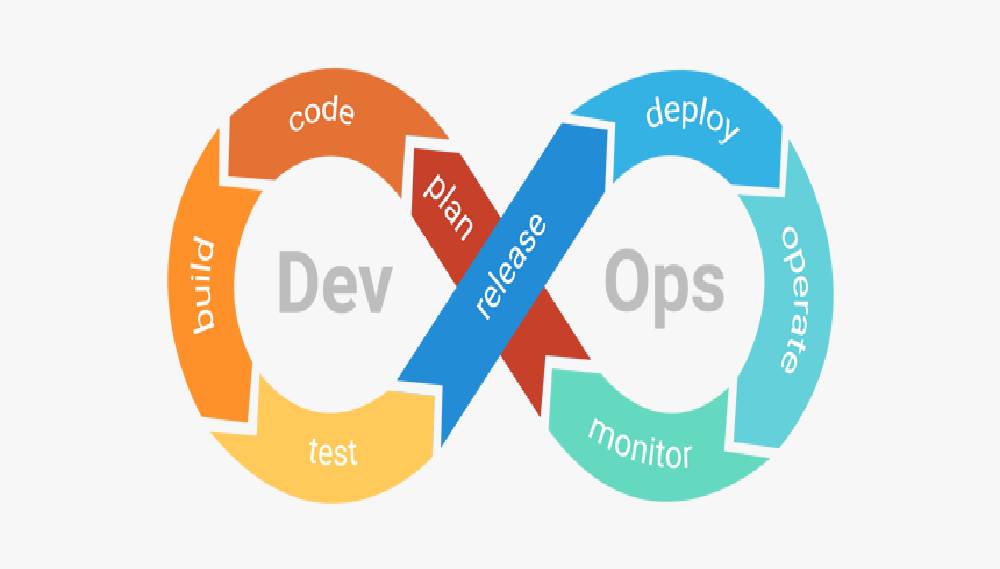
DevOps is the practice of bridging software development and IT operations through automation, shared tooling, and collaborative workflows that enable IT companies to release software faster, more reliably, and with lower operational risk. The core DevOps disciplines — Continuous Integration and Continuous Deployment (CI/CD), Infrastructure as Code (IaC), containerisation, automated testing pipelines, and observability — collectively reduce the time between a developer committing code and that code reaching production users from days or weeks to minutes or hours. For Gurugram IT companies whose engineering teams are still deploying manually, updating production servers via SSH, and managing infrastructure through console clicks, DevOps consulting delivers the automation layer that makes scaling the engineering team possible without scaling operational risk proportionally. Garuda Technologies implements DevOps infrastructure for IT companies, SaaS products, and software development firms in Gurgaon using GitHub Actions, Docker, Kubernetes, Terraform, and AWS-native DevOps tooling.
Pain Point | What Happens and How DevOps Fixes It |
Manual deployments causing production incidents | Developers SSH into production servers, run git pull, restart services manually, and hope nothing breaks. Without a deployment pipeline, there is no rollback mechanism, no pre-deployment testing gate, no deployment record, and no consistency between what was tested in staging and what runs in production. A single forgotten environment variable or a missed file permission change can take a production application offline for hours. CI/CD pipelines automate the deployment process, enforce pre-deployment testing, and provide one-click rollback to the previous version. |
Infrastructure managed through console clicks with no documentation | Every EC2 instance, RDS database, S3 bucket, and security group was created through the AWS Console by a developer who is no longer with the company. No one knows exactly what configuration is in place, why certain ports are open, or how to recreate the environment if it needs to be rebuilt. Infrastructure as Code (Terraform or AWS CloudFormation) defines every infrastructure resource in version-controlled configuration files — the entire environment can be recreated in minutes, changes are tracked in git history, and the infrastructure is documented by definition. |
Development, staging, and production environments behaving differently | 'It works on my machine' is the symptom of environment inconsistency. Docker containerisation packages the application and all its dependencies into a portable container image that runs identically on a developer's laptop, a CI server, a staging environment, and a production server. Eliminating environment inconsistency eliminates the category of production bugs that are caused by configuration differences rather than application code problems. |
No visibility into what is happening in production | When a production incident occurs, the first question is always 'what changed?' and the second is 'what is the current state?' Without centralised logging (ELK stack or AWS CloudWatch), distributed tracing (AWS X-Ray or Jaeger), and infrastructure monitoring (Prometheus with Grafana dashboards), answering either question requires manual server access and file inspection. Observability tooling makes production state visible in real time and creates the alert system that notifies the team before users report problems. |
Garuda Technologies implements CI/CD pipelines using GitHub Actions as the standard automation platform for most Gurgaon IT company projects. A complete CI/CD pipeline includes: automated unit and integration test execution on every pull request, static code analysis and security vulnerability scanning (Dependabot, CodeQL), Docker image building and pushing to Amazon ECR or Docker Hub, automated deployment to staging environment on merge to main branch, and production deployment with manual approval gate and automated rollback on health check failure. Every pipeline is defined as code in the repository's .github/workflows directory — version-controlled, reviewable, and reproducible.
Garuda Technologies provisions and manages cloud infrastructure using Terraform — HashiCorp's IaC tool that supports AWS, Google Cloud, and Azure through a single configuration language. Terraform configuration files define every infrastructure resource: VPCs, subnets, EC2 instances, RDS databases, S3 buckets, IAM roles, security groups, load balancers, and CloudFront distributions. The Terraform state file tracks the current infrastructure state, enabling plan/apply cycles that show exactly what changes will be made before applying them. Remote state stored in S3 with DynamoDB locking enables team-based infrastructure management without state file conflicts.
Docker containerisation packages applications into portable, reproducible container images that run identically across all environments. Garuda Technologies dockerises existing applications by writing Dockerfiles that capture the application's runtime dependencies, environment configuration, and startup commands. For applications requiring orchestration of multiple containers (web app, API, background workers, Redis, database), Docker Compose manages local development environments and Kubernetes (on AWS EKS or managed clusters) manages production container scheduling, scaling, and health monitoring.
Garuda Technologies implements a three-layer observability stack: centralised log aggregation using AWS CloudWatch Logs or the ELK stack (Elasticsearch, Logstash, Kibana) for application and infrastructure logs; application performance monitoring using AWS X-Ray or Datadog for distributed request tracing; and infrastructure monitoring using CloudWatch Metrics or Prometheus with Grafana dashboards for CPU, memory, database query performance, and API response time visualisation. Alert thresholds trigger PagerDuty or Slack notifications before user-facing impact occurs.
Security checks integrated into the CI/CD pipeline — DevSecOps — catch vulnerabilities before they reach production rather than discovering them through post-deployment security audits. Garuda Technologies integrates: Dependabot for automated dependency vulnerability scanning and pull request creation for security patches, Trivy for Docker image scanning before deployment (blocking images with critical CVEs), AWS Config for continuous infrastructure compliance checking against defined security rules, and AWS GuardDuty for runtime threat detection in production environments.
Phase | Activity and Deliverable |
Week 1-2: Assessment and planning | Audit of current deployment process, infrastructure state, and development workflow. Identification of highest-impact automation opportunities. Proposed pipeline architecture and tool selection aligned with existing stack. |
Week 2-4: CI pipeline setup | GitHub Actions workflows for automated testing and code quality checks on all pull requests. Test coverage baseline measurement. Development team training on PR-based workflow. |
Week 4-6: CD pipeline and staging | Automated deployment pipeline to staging environment. Docker containerisation of application components. Staging environment provisioned via Terraform. Health check monitoring for staging deployments. |
Week 6-8: Infrastructure as Code | Existing production infrastructure documented and replicated in Terraform. Remote state configuration. Full environment recreation tested from Terraform configuration alone. |
Week 8-10: Observability setup | Centralised logging configured. Application performance monitoring active. Grafana dashboard for key infrastructure and application metrics. Alert thresholds and Slack/PagerDuty notification channels configured. |
Week 10-12: Production pipeline and handover | Production CD pipeline with manual approval gate. Rollback mechanism tested. Runbook documentation for common operational tasks. Team training on pipeline operation and Terraform workflow. |
Engagement Type | India Pricing Range and Timeline (2026) |
CI/CD pipeline setup only | INR 80,000 to INR 1,50,000. GitHub Actions pipeline for testing and deployment to one environment. 3 to 5 weeks. |
Full DevOps implementation | INR 2,00,000 to INR 5,00,000. CI/CD, Docker, Terraform IaC, observability stack, two environments. 8 to 12 weeks. |
DevOps for Kubernetes (EKS) | INR 3,00,000 to INR 8,00,000. Container orchestration, autoscaling, service mesh, advanced monitoring. 10 to 16 weeks. |
DevOps advisory retainer | INR 30,000 to INR 80,000 per month. Ongoing infrastructure management, pipeline maintenance, architecture review, incident response support. |
Cloud services (AWS, Google Cloud, Azure) provide the infrastructure — compute, storage, databases, and networking — on which applications run. DevOps is the set of practices and tools that automate how code moves from a developer's machine to that cloud infrastructure. A company can have cloud infrastructure without DevOps practices (manual deployments to cloud servers) and can have DevOps practices without cloud infrastructure (automated pipelines deploying to on-premise servers). In practice, most Gurugram IT companies implement DevOps and cloud infrastructure together because cloud APIs enable infrastructure automation that is difficult or impossible with on-premise hardware.
Yes — at a scale-appropriate level. A 3-person development team does not need Kubernetes cluster management. But every development team benefits from automated testing on pull requests, consistent Docker-based development environments, and a repeatable deployment process that does not depend on a specific developer knowing the manual steps. The minimum viable DevOps investment for a small Gurgaon IT company is: a GitHub Actions CI pipeline that runs tests automatically, a Dockerfile that ensures environment consistency, and a documented deployment process. This minimal setup takes 2 to 3 weeks to implement and prevents the class of production incidents that consume disproportionate time in manual-deployment teams.
A complete DevOps implementation — CI/CD pipelines, Docker containerisation, Terraform IaC, and observability stack — takes 8 to 12 weeks for a standard Gurgaon IT company application with one backend service and one frontend. More complex architectures with multiple microservices, multiple deployment environments, and Kubernetes orchestration take 12 to 20 weeks. Implementation speed is most constrained by the existing application's compatibility with containerisation (legacy applications with environment-specific hard-coded configuration require refactoring before Dockerisation) and by the development team's availability for training and workflow adoption alongside their normal feature development work.

Garuda Technologies - Copyright . All rights reserved.
Garuda Technologies is a Gurgaon-headquartered technology and travel services company operating from Udyog Vihar, Sector 19 — the heart of Gurugram's IT and industrial corridor. Founded with the conviction that businesses deserve a single accountable partner for their digital and travel needs, Garuda Technologies operates two integrated verticals: a full-spectrum IT and digital services division, and a travel services division powered by seven specialized travel brands.